
On 3 February 2026, the Global Virtual MarTech Summit APAC & EMEA brought together senior marketing, digital, and technology leaders from across the world to explore the future of data-driven growth. Under the theme “A Global View of Where Marketing Is Going Next”, the summit examined how customer experience, data strategy, commerce innovation, and marketing transformation are reshaping the way organisations drive measurable impact.
Attracting 1,000+ attendees from both APAC and EMEA, the summit delivered eleven high-impact sessions, including live panels, fireside chats, and regional keynotes. Across both tracks, delegates engaged with industry leaders who shared real-world case studies, practical frameworks, and actionable insights, turning industry buzz into tangible business outcomes.
APAC Track
Who Attended?
The APAC track welcomed a highly senior and diverse audience, with over 85% at senior manager level and above. Attendees represented enterprise organisations across Singapore, Hong Kong, Indonesia, the Philippines, India, Thailand, and Australia, alongside participants from broader APAC markets. Singapore and the Philippines formed the largest segments, reinforcing their roles as key regional hubs for marketing, data, and digital leadership.
Attendee Demographics:
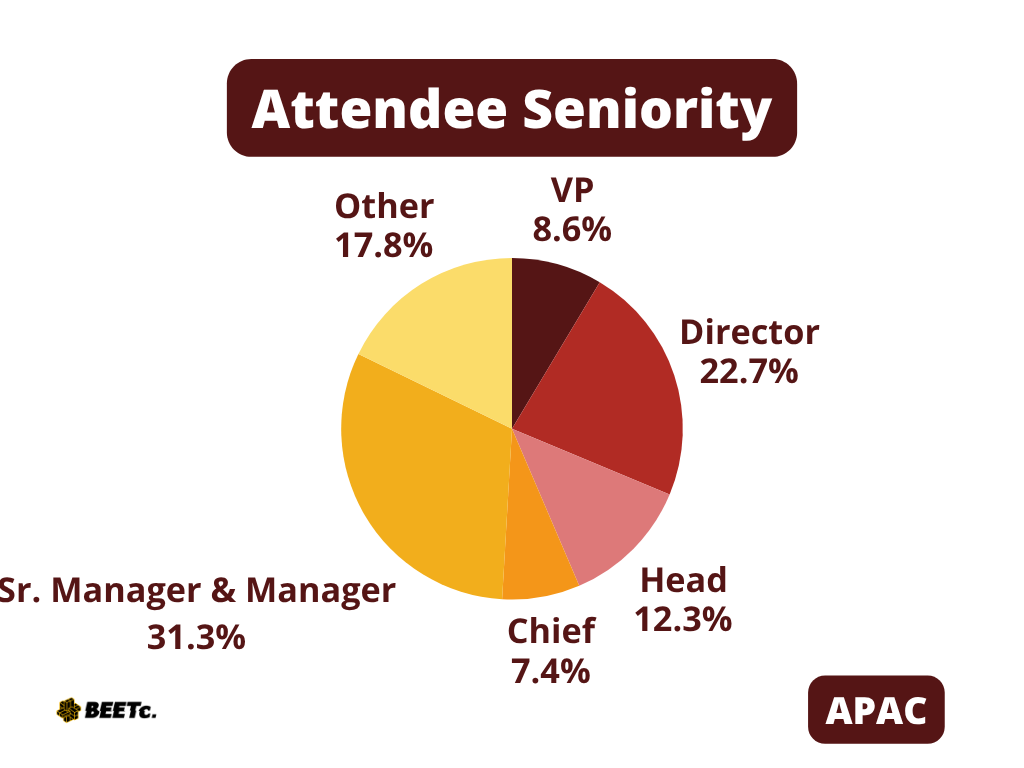
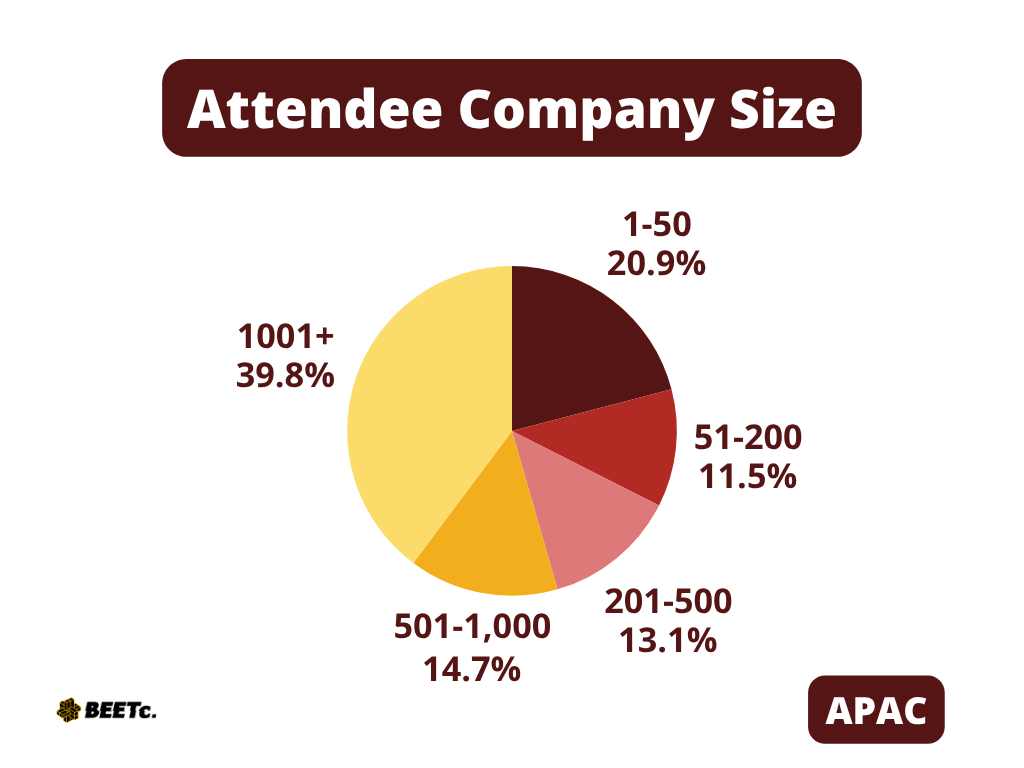
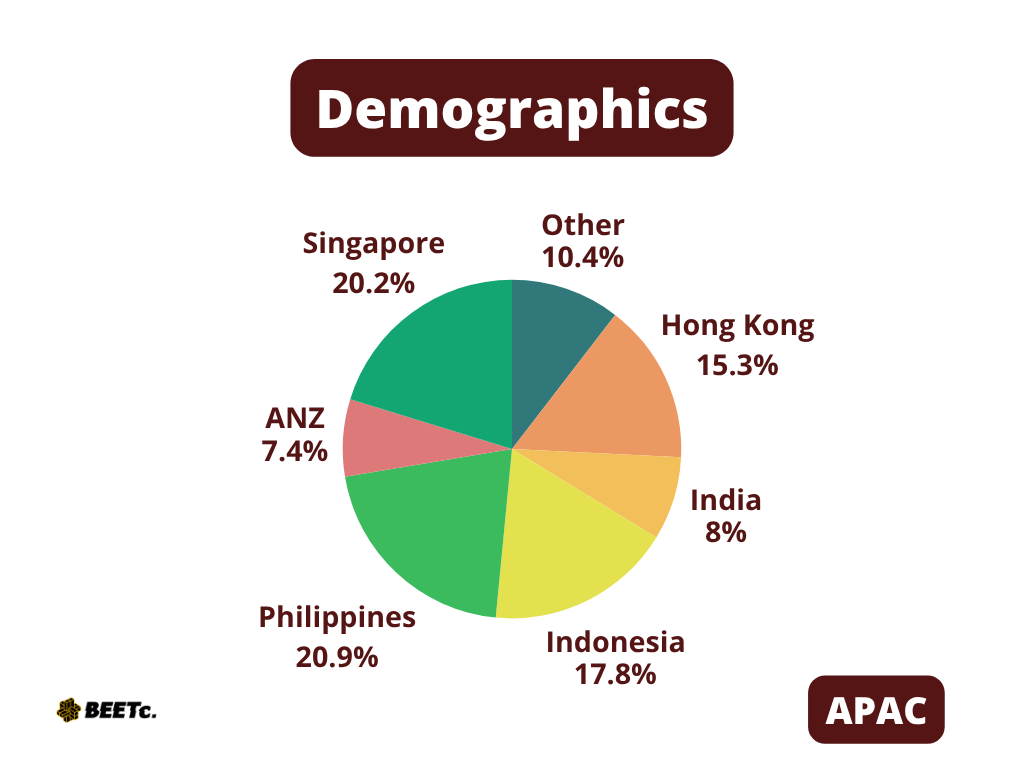
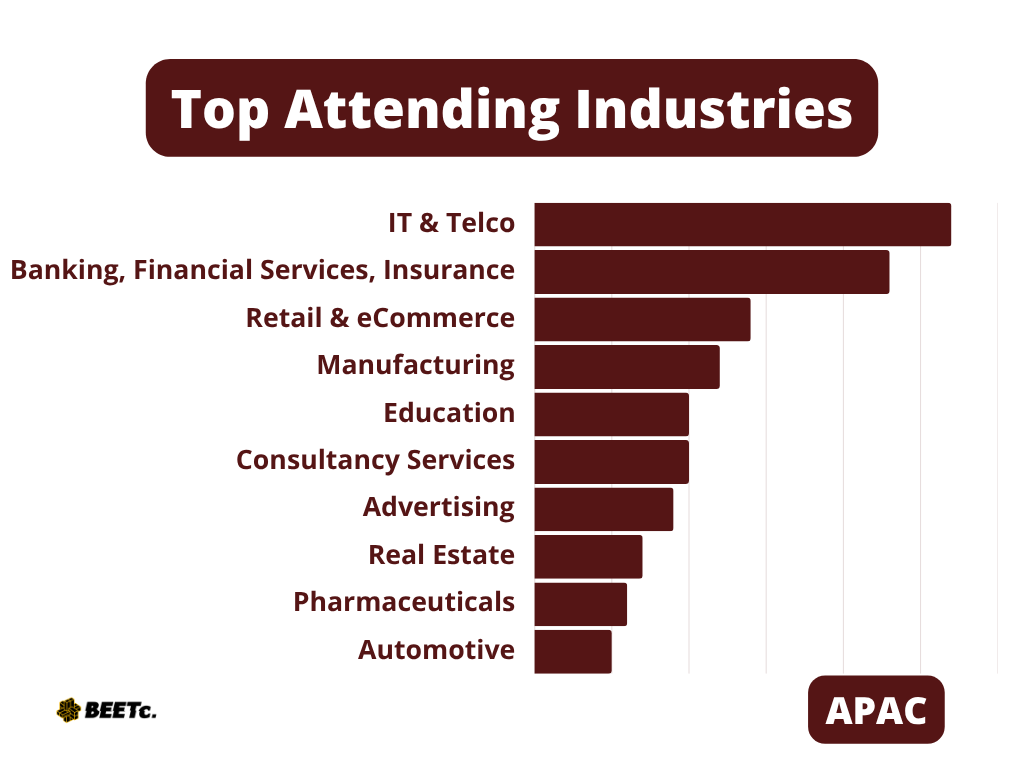
Attendees predominantly came from large enterprises (1,000+ employees), complemented by mid-sized organisations and high-growth companies. The strongest industry representation included Banking, Financial Services & Insurance, Retail & eCommerce, IT & Software, Healthcare & Pharmaceuticals, Manufacturing, Telecommunications, and Agencies & Consultancy.
Poll Insights : CX Acceleration
During our opening panel, we asked attendees about their biggest organisational challenge in advancing customer engagement.
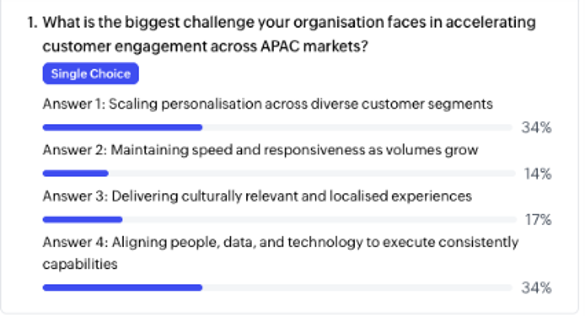
Our live poll revealed two equal challenges: scaling personalisation across diverse segments and aligning people, processes, and data.
Angel Lo, Director, Customer Experience APAC, Olympus APAC:
“Standardise the system, personalise the experience.” Angel’s insight directly addressed this tension. True hyper-personalisation requires a unified backbone, standardised data, aligned platforms, and clear journey stages. When the foundation is strong, markets can personalise effectively without creating operational complexity.

More Key Insights from Industry Leaders:
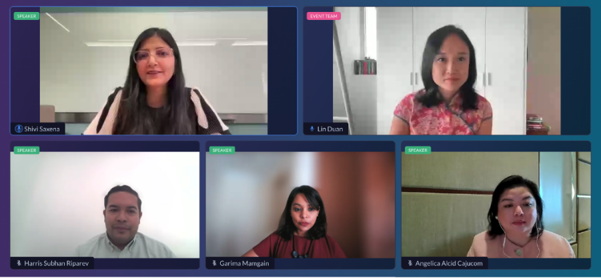
Influencer Strategy – Shivi Saxena, Senior Director, Strategy APAC, WPP Media:
“Influencer marketing is no longer a top-of-funnel awareness play, it is a full-funnel performance engine.” She emphasised brands must move beyond paying for reach and instead build lifecycle-based measurement frameworks that map attribution across each stage of the customer journey. Influence should be designed to trigger intentional emotional drivers and measured accordingly.

Commerce Growth – Phunnapa Framee Limtansakul, Director, E-Commerce & Go-To-Market, Opella.:
“Commerce growth doesn’t come from doing more, it comes from doing clearer.” Instead of expanding assortments or adding complexity, brands should simplify decision-making and remove friction across the customer journey. When data is used to connect touchpoints and streamline choices, impact becomes measurable, scalable, and sustainable.
To see more our upcoming summits, please visit: https://themartechsummit.com/events/
EMEA Track
Who Attended?
The EMEA track welcomed a highly senior and diverse audience, over 80% of the attendees are above senior manager level, with strong representation from enterprise organisations across the United Kingdom, Germany, Spain, the Netherlands, France, Sweden, and the United Arab Emirates, alongside participation from broader Europe, the Middle East, and Africa. The UK and Germany formed the largest segments, reflecting strong engagement from mature digital and marketing technology markets across the region.
Attendee Demographics:
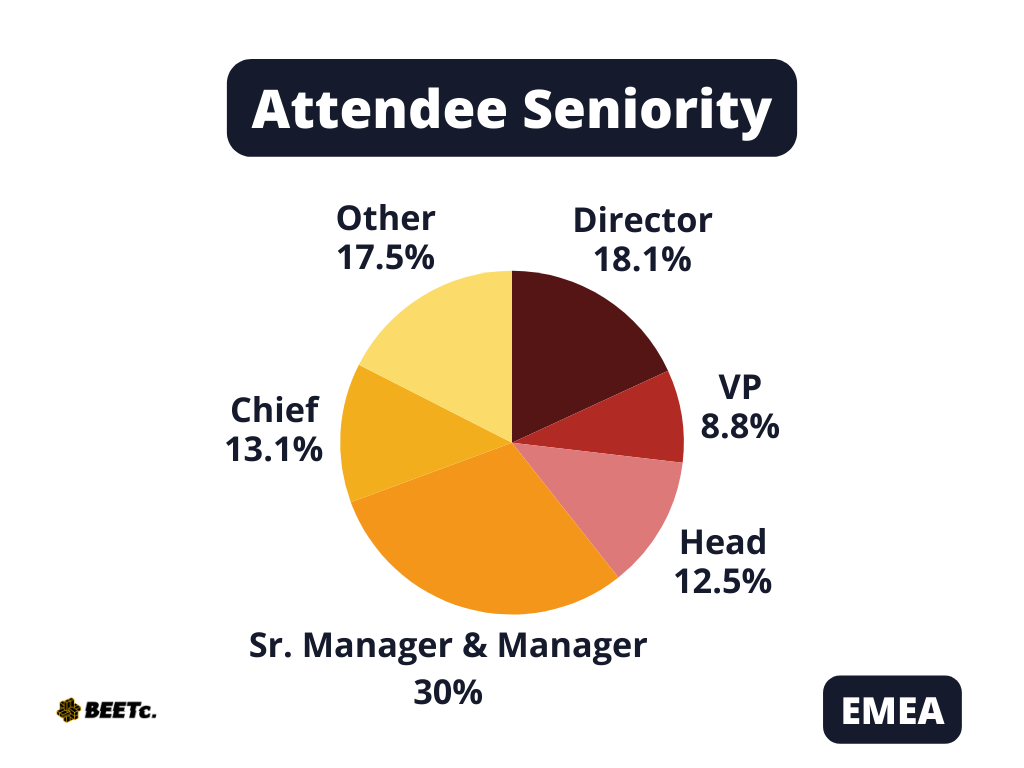
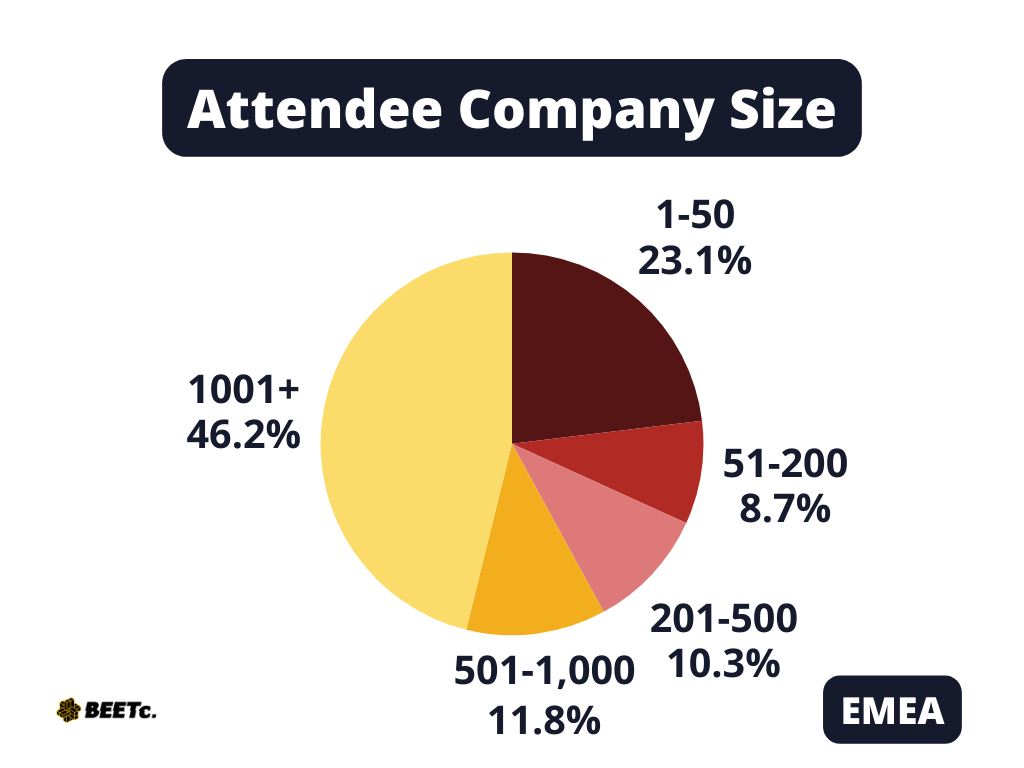
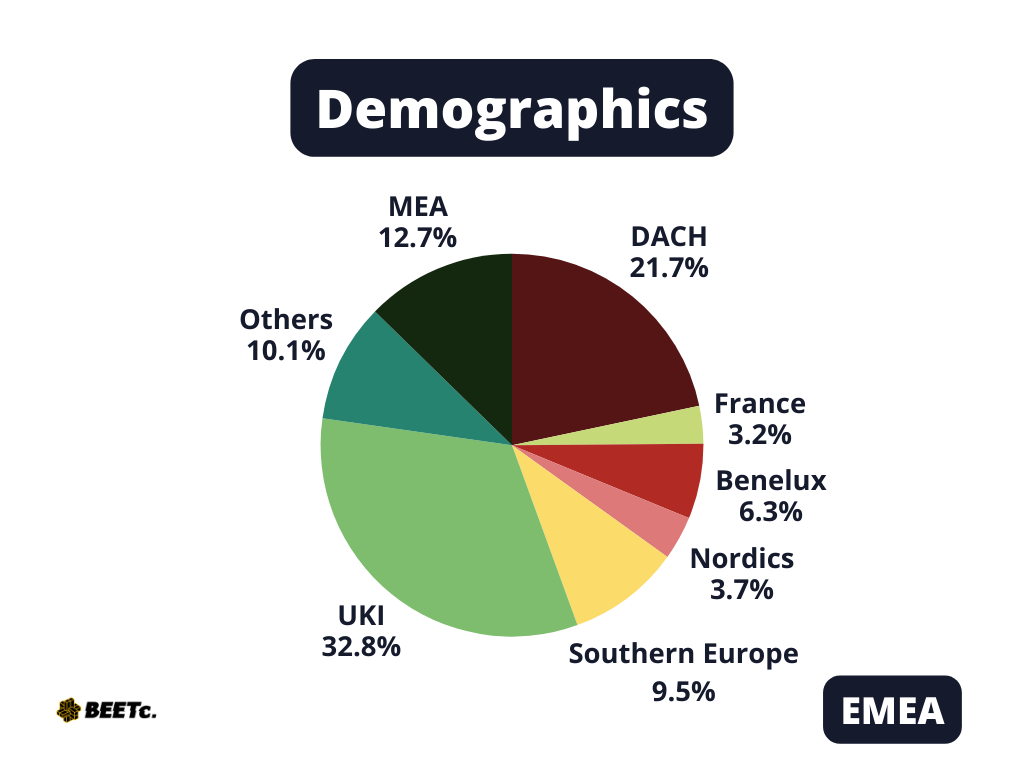
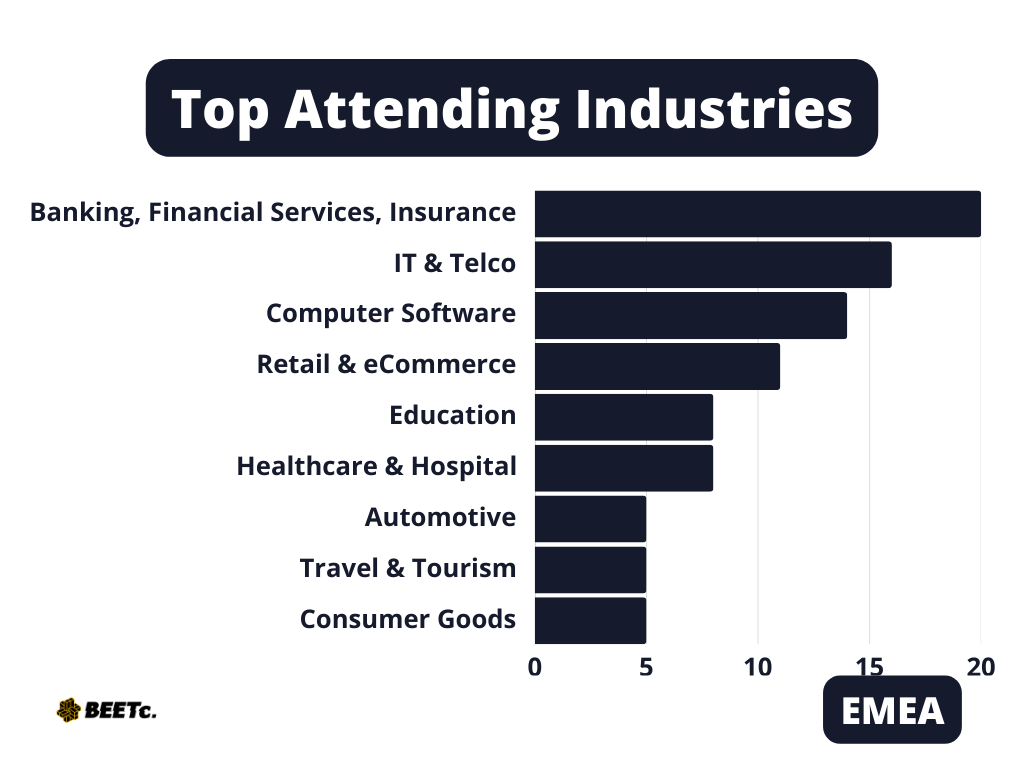
Attendees predominantly came from large enterprises (1,000+ employees), complemented by mid-sized organisations and specialist consultancies. Overall, more than 58% of attendees represented companies with over 500 employees. The strongest industry representation included Banking & Financial Services, Retail & eCommerce, Consumer Goods, Automotive, Healthcare & Pharmaceuticals, Technology & Software, Manufacturing, Media & Advertising, Telecommunications, and Travel & Hospitality, reflecting a diverse cross-industry audience driving digital transformation, marketing innovation, and data-led customer engagement across the region.
Poll Analysis:
During our global panel discussion - Customer Data, which featured speakers from both APAC & EMEA, we asked the audience about the biggest barrier to achieving a unified customer view across regions in their organisation.
The responses reflected a shared global challenge: while organisations recognise the value of a unified customer view, structural, technical, and cross-regional alignment barriers continue to slow progress. The discussion reinforced that unification is not just a technology issue, it is an organisational transformation effort.
Key Takeaways from the Speakers
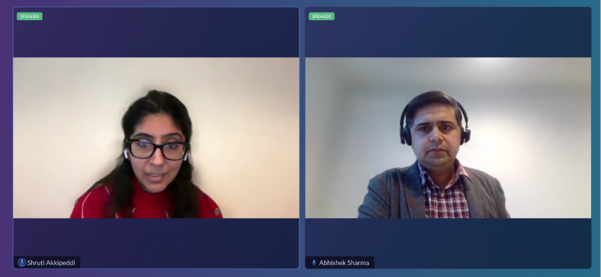
First-Party Data – Shruti Akkipeddi, E-Commerce Analytics & Insights, JDE Peets
“Always begin with the why. Identify the data that directly supports your objective and maintain sharp focus.” She emphasised that organisations should avoid chasing every available data point. Relevance drives impact. Even a small, well-structured dataset can generate meaningful and actionable insights when aligned to a clear purpose.”
Sustainability & Social Responsibility – Andjela Pasi, Director, Global Marketing, Waldom Electronics:
“Stop aiming for perfect ESG narratives. Start communicating progress.” In B2B environments such as electronics, credibility is built through transparency. Clearly state where you are today (for example, “we’re 60% there”), outline the actions being taken, and define accountability internally. Honest progress builds more trust, and reduces greenwashing risk, than polished but vague claims.

Our last panel about Customer Growth – Helena Graeser, Marketing Operations Leader, Dow Chemical’s:
Running digital Marketing in an almost 130-year-old B2B tanker takes patience and courage. If you find yourself in a similar environment, do not stop experimenting and bringing new ideas forward. To overcome resistance:
1. Make it easy for business partners by pre-building journeys and creating a catalogue of simple automated programmes such as abandoned-cart follow-ups.
2. Identify willing partners and begin with use cases that deliver fast impact.
3. Collect data, measure performance, and compare against baseline metrics.
4. Communicate impact broadly to build interest and scale adoption across the commercial organisation.
And Muhammad Ali, Digital Analytics Lead, Wise:
“Just remember, change takes time. Have a plan, start small, and create some impact before aiming for major transformation.”
MarTech did not exist 20 years ago. It is still a rapidly evolving space, creating opportunities across data, technology stacks, operational efficiency, and AI. Identify what works for your organisation, start small, and build stakeholder confidence.

Global Closing Reflection
Across both APAC and EMEA, a clear and consistent message emerged: the future of MarTech is not about adding more tools, it is about building stronger foundations.
Whether discussing customer data unification, first-party data strategy, sustainability communication, or customer growth, leaders across regions reinforced the same principles:
- Standardise before you personalise
- Clarify strategy before selecting technology
- Focus on relevance over volume
- Deliver impact incrementally, then scale with confidence
From Singapore to London, from enterprise banks to global consumer brands, organisations are facing similar structural challenges, data fragmentation, alignment gaps, vendor complexity, and change resistance. Yet the opportunity remains significant. With disciplined execution, transparent governance, and purposeful experimentation, MarTech can move from operational complexity to competitive advantage.
As we look ahead to future editions of the Global Virtual MarTech Summit, one thing is certain: the conversation is no longer about whether transformation is necessary, but how effectively and how strategically organisations choose to lead it.
Looking Forward
Following the success of the February 2026 edition, we are delighted to announce our upcoming MarTech Summits across the APAC region:
In the APAC region
In the EMEA region
To see more our upcoming summits in 2026, please visit: https://themartechsummit.com/events/
The Global Virtual MarTech Summit APAC & EMEA continues to be a pivotal event for marketing and technology professionals. We extend our gratitude to all speakers, attendees, and partners for their contributions. For those who missed the live event, on-demand content is available on BEETc On-Screen.
We look forward to welcoming you to our future events as we continue driving innovation and excellence in marketing technology together.
We hope to see you at our future events and let’s continue pushing the boundaries of what it means to be marketers together!
Future engagement
Lastly, don’t forget to stay up-to-date with all things The MarTech Summit by following our social media accounts to not miss an update!
Find us on:
Stay tuned for updates!
By: Charley, Mar 2026