
As customer attention becomes increasingly fragmented, brands need to do more than simply stay visible. They need to create experiences that are relevant, useful and worthy of trust.
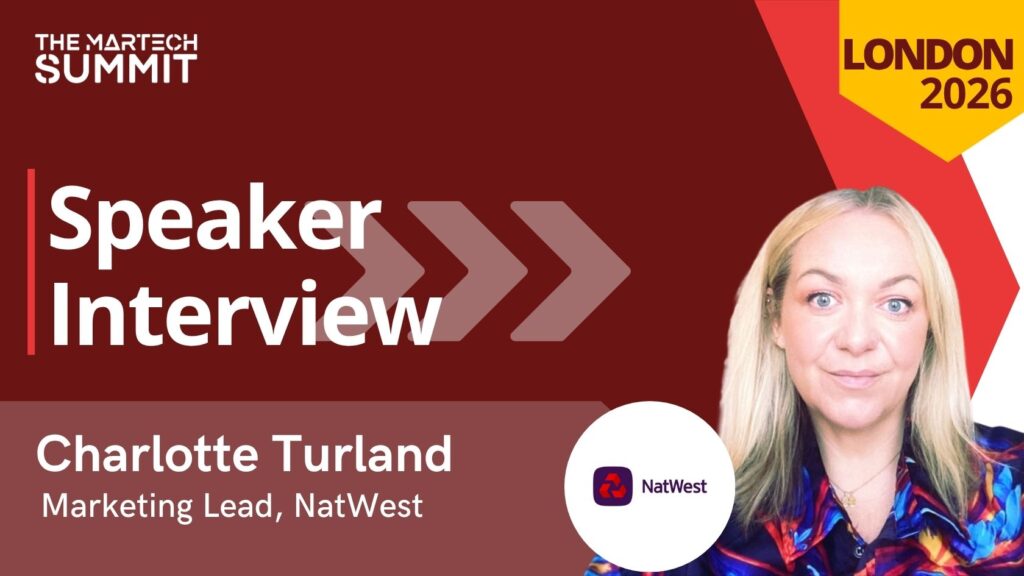
Ahead of The MarTech Summit London 2026, we spoke with Charlotte Turland, Marketing Lead at NatWest, about building brand relevance, creating meaningful digital experiences and balancing creativity, technology and customer needs in a rapidly changing marketing landscape. She also shares why curiosity, AI literacy and the ability to turn complex technology into simple human experiences are becoming essential skills for modern marketers.
About NatWest
NatWest is one of the UK’s leading banking groups, providing banking and financial services to personal, business and corporate customers. The group offers a wide range of products and services across everyday banking, savings, lending, mortgages and wealth management. With a strong focus on digital transformation and customer experience, NatWest continues to develop its digital channels and services to make banking more accessible, relevant and useful for customers.
Quick Q&A with Charlotte Turland
Could you please give us a quick introduction of yourself and share a bit about your role at NatWest?
I’m Charlotte Turland, a Marketing Lead at NatWest in our Retail (consumer) franchise, currently focused on shaping how we connect and grow with customers through our Premier proposition. I work across strategy, marketing, GTM, content and customer experience, helping ensure we’re delivering communications and experiences that are relevant, valuable and aligned to what customers need at different stages of their financial lives.
Why did you choose to participate in this summit?
Marketing is evolving faster than at any point in my career. Customer expectations are changing, technology is advancing rapidly, and AI is reshaping how people discover information and engage with brands. I wanted to participate because it’s a great opportunity to share experiences with other marketers who are navigating similar challenges. The most valuable conversations often happen when we move beyond theory and talk honestly about what’s actually working, what’s changing, and how we can use technology to create better customer outcomes rather than simply more marketing activity.
What does “brand relevance” mean to you today, and how can marketers tell the difference between being visible and being genuinely relevant to customers?
Visibility is about being seen. Relevance is about being chosen. Today’s customers are exposed to more content than ever, so simply reaching people isn’t enough. A brand becomes relevant when it consistently solves a problem, meets a need or adds value in a way that feels meaningful to the customer.
Marketers can tell the difference by looking beyond traditional awareness metrics. High reach and impressions may tell you people have seen you, but relevance shows up in engagement, consideration, recommendation and ultimately customer behaviour. If customers actively seek you out, trust your guidance and choose to spend time with your content, that’s a strong signal that you’re becoming relevant rather than merely visible.
For brands operating in sectors where trust really matters, how does that change the way you think about digital experience and customer communication?
In sectors like financial services, trust isn’t a campaign objective; it’s the foundation of every interaction. That means digital experiences need to be designed around clarity, transparency and consistency. Customers should always understand what they’re being asked to do, how their information is being used, and what value they’ll receive in return. It also means balancing personalisation with responsibility. The most effective communications aren’t necessarily the most targeted; they’re the ones that genuinely help customers make informed decisions. When trust matters, every touchpoint becomes a brand moment, and small details can have a significant impact on how customers perceive your organisation.
What skills do you think marketers need to develop now that weren’t nearly as important when you started your career?
The biggest shift is the need to combine creativity with technology and analytical thinking. Marketers today need a strong understanding of AI, data and digital ecosystems, not because they need to be technical specialists, but because these capabilities increasingly influence how customers discover, evaluate and engage with brands. Alongside that, I think curiosity has become a critical skill. The pace of change means marketers have to be continuous learners, comfortable testing new approaches and adapting quickly. The ability to translate complex data and technology into simple, human-centred experiences is becoming one of the most valuable skills in our profession.
Can you share one personal or professional goal you’d like to achieve in 2026?
Professionally, I’d like to continue developing how we work with our partners and teams to bring AI-driven insights into our creative and comms. I’m leading a pilot that will help us test the waters here and ensure we are maximising what we do for LLMs and showing up for customers in the right way and in the right place. Personally, I’ve got a great idea for a podcast so keen to understand if I can take all my skills to cut through in an incredibly saturated market!
Charlotte’s perspective highlights that genuine relevance is built through value, trust and a deep understanding of what customers need, rather than simply increasing reach or marketing activity. As AI and digital technology continue to reshape how customers discover and interact with brands, marketers will need to combine creativity, analytical thinking and human judgement to create experiences that truly matter.
Join Charlotte Turland and fellow marketing leaders at The MarTech Summit London as we explore how brands can build relevance, earn attention and create better customer experiences in an increasingly digital world.
The MarTech Summit London – Smarter Stacks. Stronger Growth.
The MarTech Summit London returns this November as Europe’s flagship MarTech event, bringing together over 600 senior marketing, customer experience, digital, data and technology leaders for two days of practical learning, meaningful networking and forward-looking discussions on the future of marketing technology.
Designed for practitioners rather than product pitches, this year’s summit features more than 90 speakers, 30+ leading solution providers, and over 33 sessions across three stages, covering everything from AI-powered marketing and customer intelligence to first-party data, marketing operations, customer experience and revenue growth.
Whether you’re modernising your MarTech stack, scaling AI adoption or improving marketing performance, The MarTech Summit London is designed to provide practical ideas you can take back to your organisation.
Hosted once again at Convene 155 Bishopsgate, this closed-door summit creates an environment where senior decision-makers can openly discuss challenges, exchange ideas, and learn from one another.
➡ Interested in becoming a partner? Don’t hesitate to get in touch with us at sponsor@themartechsummit.com.
Can’t attend in person? No problem. Join BEETc On-Screen, our On-Demand Learning Platform, for exclusive access to 500+ sessions and over 300 hours of content from global summits. Upskill at your own pace, gain actionable insights, and stay ahead in a rapidly evolving business landscape.
Stay up to date with our Speaker Line-up, Session Information, and Agenda Updates by following us on:
See more MarTech Thoughts interview pieces here!
Last updated: October 2026