
Unveiling Insights: Answers to Your Burning Questions from the Summit
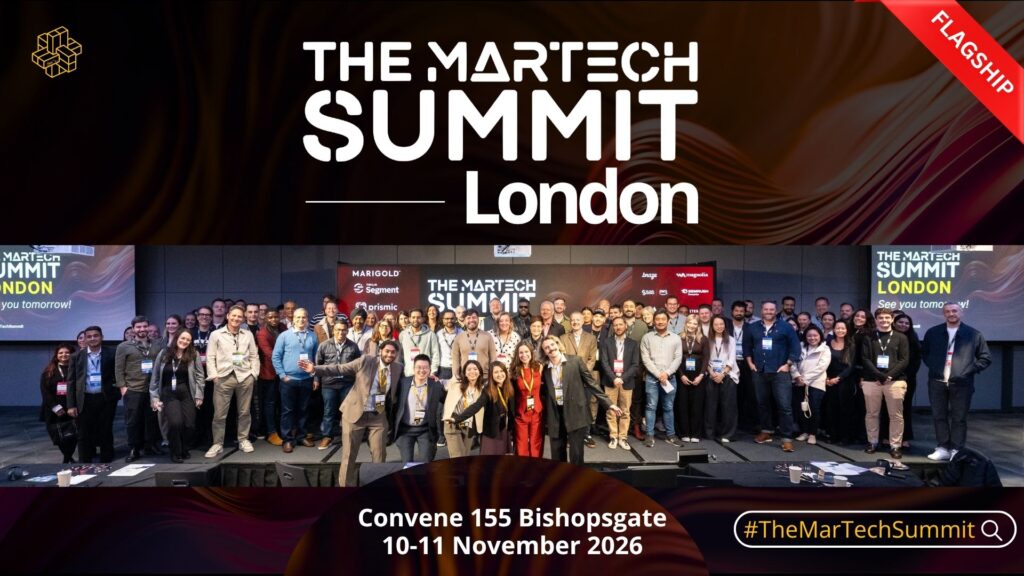
Over 600 MarTech professionals & industry leaders professionals gathered at The MarTech Summit London, the summit explored the intersection of marketing innovation and technology, featuring B2B Marketing & B2C Marketing Stages and covering topics like Customer Experience & Engagement, Data-Driven Personalisation & Technology, Smarketing Alignment, Demand Generation, and much more. It’s an unparalleled opportunity for like-minded professionals to connect, exchange experiences, and discuss the latest trends and challenges.
Now, welcome to our summit’s aftermath – Join us as we unravel the mysteries and shed light on the lingering questions posed to the brilliant speakers who captivated us during the summit!
Experience the summit in motion with BEETc On-Screen – our on-demand learning platform offering exclusive access to past MarTech Summit sessions, insightful webinars, and more. Use code PSR1MON to register now and enjoy 1 month of free access. Catch up, revisit, and discover fresh perspectives at your own pace.
Presale Now On, Limited Tickets, Grab It Before It’s Gone!
In 2026, The MarTech Summit is returning to London! PRESALE is now open! Get 60% off your summit pass and secure your spot at this premier MarTech event.
*Limited time and limited tickets
Unanswered Q&A from The MarTech Summit London
- [Personalisation] How Leading Brands Are Unlocking the Power of Personalisation & Scaling Smart
- [CDP Integration] Building Unified Customer Journeys Beyond Email
- [Marketing ROI] Unlocking Revenue with Strategic Consent
- [The Future of Content] Why Brands Still Need Humans
Panel Discussion | [Personalisation] How Leading Brands Are Unlocking the Power of Personalisation & Scaling Smart
Speaker:
Liam Barnes, Global Head of MarTech, Campari Group
❓Do LLMs signal the end of ML for personalisation? If not, how should marketers approach ML and LLMs in their personalisation strategies?
LLMs aren’t the end of machine learning for personalisation—they’re its perfect partner. ML still drives the heavy lifting on structured data tasks like predicting churn, segmenting audiences, and scoring leads, while LLMs shine at crafting context-rich, personalised content and conversations. The smartest approach? A hybrid strategy: let ML decide what to offer, and LLMs decide how to say it. Together, they enable marketers to deliver predictive precision and creative personalisation at scale—without sacrificing speed, relevance, or brand voice.
❓Which technologies or data models enable truly cross-channel personalisation?
Cross-channel personalisation relies on a unified customer view powered by identity resolution, customer data platforms (CDPs), and AI-driven decisioning. Identity resolution stitches together fragmented identifiers, while CDPs use graph-based or event-driven models to consolidate behavioural, transactional, and contextual data in real time. Throw in a centralised capability like a DAM that industrialises content to support its creation, distribution, and measurement, and you are good to go!
❓Will the future of personalisation move toward emotional AI that understands tone, mood, and intent?
Personalisation is evolving toward emotional AI, which interprets tone, mood, and intent to create more empathetic and context-aware experiences. Unlike traditional methods that rely on static data like demographics or purchase history, emotional AI uses real-time signals from text, voice, and even facial cues to adapt messaging dynamically. This enables brands to deliver interactions that feel human-like and relevant to a user’s emotional state, improving engagement and trust. However, challenges such as accuracy, cultural nuance, and ethical transparency remain critical to its widespread adoption.
❓What leadership or cultural shifts are needed to embed personalisation across the organisation?
To embed personalisation across a CPG organisation like ours, leaders must shift from mass marketing to consumer-centric strategies, champion data-driven decision-making, and commit to long-term investment in technology and talent. Culturally, the organisation needs to foster cross-functional collaboration, break silos, and embrace a test-and-learn mindset that encourages agility and experimentation. Enablers include upskilling teams in analytics and AI, establishing strong data governance for privacy, and integrating technology platforms to deliver real-time personalised experiences at scale.
❓What tools or processes made the biggest difference in helping your teams deliver more relevant, timely experiences?
The biggest difference comes from combining real-time insights, automation, and personalisation. Customer Data Platforms unify data for a single customer view, while social listening and analytics tools help teams react quickly to trends. Marketing automation ensures the timely delivery of campaigns, and AI-driven personalisation tailors content to individual behaviours. Finally, collaboration and knowledge-sharing platforms make insights accessible across teams, enabling faster decisions and continuous optimisation through testing. Together, these tools create a seamless cycle of listening, insight, activation, and measurement for more relevant, timely experiences.
❓With privacy rules tightening and third-party data fading, what steps are you taking to build a stronger first-party data foundation?
In my role, a focus on creating a robust first-party data foundation by implementing a clear data governance framework to ensure compliance with tightening privacy regulations, investing in scalable technologies like Customer Data Platforms to unify and activate consumer data, and partnering with marketing to design value-driven experiences that encourage consumers to share data willingly. Transparency, security, and ethical data practices are essential to build trust and enable personalisation at scale.
Panel Discussion | [CDP Integration] Building Unified Customer Journeys Beyond Email
Speaker:
Priya Verma, Senior Digital Analytics Implementation Engineer, Compare the Market
Sonia Aslam, Former Head of Business Intelligence & Analytics, Commercial, Virgin Media O2
❓Priya – when you say you wanted to target people more efficiently, what main metrics were you using to measure ‘efficiency’?
Priya: The metrics that were used to my knowledge were but not limited to :
- Prefill Accuracy Rate
- % of Customers Editing Prefilled Data
- Time Saved per Journey
- % of Prefill Acceptance
❓Great to see so many female leaders on this panel. What barriers did you face on your way to senior leadership, and how did you overcome them in a male‑dominated environment?
Priya: I think the very first step is to be confident and know your bits. If you are clear on what you want to achieve, no amount of barriers can stop you. Be confident and not nervous. Stop judging yourself and rise above all the negative thoughts. I agree , there is more effort and work required to do this, but trust me, it is worth it. It just needs to hit the right cord and you are good to go
❓Who should lead or own the project of implementing a CDP: the Digital Marketing Department or the IT Department?
Priya: Depends on the CDP tool your are using. As I said, some CDPs are very technical and, hence, IT needs to be involved, while others are just self-serve for marketers, so it can sit there. It must sit with the team who are responsible for using and making decisions through the CDP rather than those who are passing data into it.
❓Can you describe the kind of role Data Stewards should play in implementing a CDP?
Data Stewards shouldn’t be seen as gatekeepers or bottlenecks, they are the enablers. The most effective ones I have seen operate as consultative partners who embed themselves early in CDP projects, not as late-stage reviewers who slow things down. We identified the Data Stewards right from the outset before our CDP design and implementation as it was a key role for alignment and trusted quality data. They were core in establishing and monitoring the metrics that matter, completeness rates, match rates, attribute accuracy, and timeliness aligned to the Data Quality Framework. They’re not just reactive troubleshooters; they proactively design quality checks into ingestion pipelines.
Since CDPs centralise customer identity, stewards played a crucial role in validating identity graphs, auditing match logic, and ensuring the platform wasn’t creating false positives that damage customer experience. Beyond just policy enforcement, they operationalised consent, mapping preferences to what data can flow where, ensuring suppression lists work correctly, and maintaining audit trails for regulatory compliance.
The Data Stewards were our Data Ambassadors to drive adoption; they educated the business users, helping marketers understand what fields meant as well as understand our data catalogue tooling, which segments were trustworthy, and how to interpret discrepancies between systems.
❓What’s the next step after email in unified customer activation?
The future is channel-less orchestration, not channel-specific campaigns. Email is simply one output. A modern CDP empowers you to trigger next best actions across:
1. Push notifications
2. In-app Messaging
3. Paid Media Suppression or Inclusion
4. Website personalisation
5. Call Center prompts
6. CRM tasks etc
The shift is from “what email should we send?” to “what is the right action for this individual right now?” An AI-driven, context-aware decision, executed across any channel.
Panel Discussion | [Marketing ROI] Unlocking Revenue with Strategic Consent
Speaker:
Silvia Iommi, Head of Commercial (fractional), London School of Business and Finance LSBF
❓How are you making your website more AI friendly ?
We are making our website more AI-friendly through several key initiatives. For example, we are rewriting content in an FAQ Style. We are gradually restructuring content into clear, question-and-answer formats and implementing FAQ schema. This makes it easier for AI systems to extract direct answers and increase the chances of appearing in AI-driven search experiences.
❓Is it a good strategy to start with legitimate interest and use CTAs to achieve consent?
It is, at least in my experience. It may also vary depending on the industry, so I recommend testing it to confirm if it’s a good strategy in your context.
❓If working globally, how do you manage different individual country’s laws and regulations around consent in one CRM?
My recommendation is to adapt with the stricter law. It’s safer, operationally easier to manage, and empowering for the customers. Consumers are drawing boundaries, both psychological and physical, around their personal data. If brands cross those boundaries without transparency, it backfires. People disengage, withhold information, or even provide false data. That hurts lead quality and, ultimately, revenue. So the challenge for marketers is no longer how much data we can collect, but how much trust we can earn.
Keynote Presentation | [The Future of Content] Why Brands Still Need Humans
Speaker:
Stefan Gass, Chief Marketing Officer, Papirfly
❓As AI tools get better, what safeguards do you use to maintain authenticity and avoid content that feels too “machine made”?
We embed brand rules directly into templates and maintain human oversight in key approval steps, ensuring content stays authentic, consistent, and aligned with brand intent.
❓In highly regulated financial environments, how do you balance AI-generated content with the need for strict compliance and human oversight?
AI accelerates production, but locked governance controls and mandatory approval workflows ensure every output meets regulatory, brand, and legal requirements before it goes live.
❓What skills do content teams need to prioritise as AI handles more production work?
Teams should strengthen brand governance, strategic storytelling, and data literacy, allowing AI to handle scale while humans shape narrative and nuance. It’s imperative that team members that interact regularly with AI tools train thier skills to recognise common AI errors and understanding how to avoid these.
❓How do you decide which parts of the content process should be AI-driven versus where human creativity is non-negotiable?
AI supports repetitive, high-volume tasks, while humans lead on brand expression, complex decision-making, and culturally sensitive or regulated messaging.
❓What governance or approval workflows work best to ensure AI-assisted content remains accurate and compliant in global financial markets?
As part of your “risk management in a financial organisation” you should have role-based permissions, structured multi-step approvals and workflows, and locked template elements. This creates a controlled environment where every asset stays compliant and traceable.
❓As AI accelerates production, how can financial brands keep communications human, trustworthy, and differentiated?
By combining strong governance with localised storytelling, brands can maintain clarity, empathy, and consistency—even when scaling within regulated frameworks.
Throughout the event, your inquiries ignited conversations and fueled our curiosity. Your engagement has truly enhanced the experience for all involved. For those unable to attend the live sessions or wanting to revisit the insightful discussions and presentations, we invite you to access the BEETc On-Screen on our learning platform. Let’s continue to connect, learn, and grow together, fostering innovation and excellence in the ever-evolving landscape of marketing technology. We eagerly anticipate welcoming you back at future events. Of course, there are more exciting in-person events throughout the year, please visit:
Stay tuned for updates!
⭐ Register now! Yearly & Monthly Passes available!
BEETc On-Screen, our On-Demand Learning Platform, where you can find all the previous sessions of The MarTech Summits, exclusive BEETc On-Screen Webinars and more!
⭐Use code PSR1MON to register now and enjoy 1 month of free access. Catch up, revisit, and discover fresh perspectives at your own pace.
Gain more MarTech insights here: https://themartechsummit.com/content-library/
Last updated: November 2025