
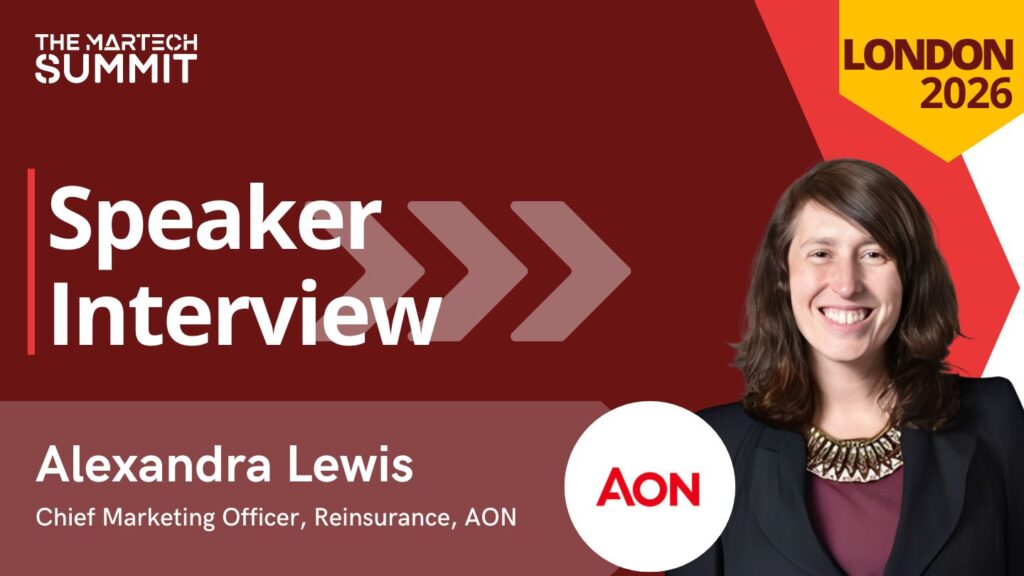
As AI makes content faster and easier to produce, the value of human judgement, creativity and understanding may become more important, not less. Ahead of The MarTech Summit London, we spoke with Alexandra Lewis, Chief Marketing Officer, Reinsurance at Aon, who will join the discussion “The Future of Content: Why Brands Still Need Humans.” With more than 20 years of experience in the insurance industry, Alexandra shares why marketers should start with strategy rather than technology, how AI can amplify strong human ideas, and why understanding what audiences genuinely need remains at the heart of effective content.
About Aon
Aon exists to shape decisions for the better – to protect and enrich the lives of people around the world. We provide our clients with advice and solutions that give them the clarity and confidence to make better decisions to protect and grow their business.
And what we do for insurers: Insurers are at the heart of creating a more resilient world but face an increasingly dynamic environment with interconnected, emerging risks and fierce competition. We’re bringing together the best of Aon to support insurance industry clients with more relevant and impactful insight and solutions to meet their strategic goals and make better business decisions.
Quick Q&A with Alexandra Lewis
Could you please give us a quick introduction of yourself and share a bit about your role at Aon?
I’ve had the privilege of working in the insurance industry for more than 20 years – and I genuinely believe it’s one of the most exciting and underrated sectors in the world. Every day, we help organisations understand, manage and transfer risk, which feels more relevant than ever in an increasingly uncertain world.
As Chief Marketing Officer for Aon’s Reinsurance Solutions business, my role is all about using marketing to drive growth, strengthen client relationships and connect the incredible expertise that exists across our business. Marketing has a unique bird’s eye view, bringing together insights, people and capabilities to help solve complex client challenges and create new business opportunities.
Why did you choose to participate in this summit?
For me, this was a fantastic opportunity to learn from other inspiring leaders and to contribute to an important conversation about the future of marketing. We’re at a fascinating point where AI is creating huge opportunities, but it’s also forcing us to think carefully about how technology and human creativity work together.
Many organisations are introducing AI into their content and marketing workflows. What advice would you give marketing leaders to ensure AI enhances creativity rather than replacing it?
My biggest piece of advice is to start with strategy, not technology. The most valuable skill a marketer can bring is the ability to sit down with leaders, truly understand the challenge clients are trying to solve and connect that to the wider business strategy. Once you have that clarity, great content comes from understanding your audience and asking, “What would genuinely help them make a better decision?”
That’s where human creativity remains critical.
I see AI as a powerful accelerator rather than a replacement. Once you’ve developed a strong idea, created a compelling piece of content and aligned it to client needs, AI can help amplify that work by creating derivative assets, personalising content, scaling campaigns and improving efficiency. The magic happens when human insight and creativity combine with AI’s ability to execute at scale.
Looking ahead, what skills do you believe marketers will need most over the next three years as AI becomes part of everyday work?
I don’t think the fundamentals change. Marketers will still need a deep understanding of business strategy and a clear view of how marketing contributes to growth.
What’s becoming increasingly important is the ability to connect the dots. As marketing becomes more data-driven and more interconnected, marketers need to understand how content, digital, events, communications, analytics and AI work together to create business impact.
I also think we’ll see a renewed appreciation for versatile marketers who can bridge specialisms, ask the right questions and bring people together to solve problems. In a world where information becomes easier to generate, judgment, curiosity and commercial thinking become even more valuable.
Is there a marketing initiative or transformation project you’re particularly proud of that taught you an important leadership lesson?
One campaign I’m particularly proud of is our Seven Traits of Top Performing Insurers initiative.
Rather than focusing on a specific product or service, we wanted to provide meaningful insight into what differentiates insurers that consistently outperform through market cycles. We combined expert perspectives, market intelligence and research to create thought leadership that clients could genuinely use.
What made the campaign especially rewarding was that it didn’t stop with content. We also developed tools that enabled our client teams to benchmark and discuss performance directly with clients, turning insight into action.
The biggest leadership lesson for me was that the most effective marketing starts with solving a real business challenge.
Can you share one personal or professional goal you’d like to achieve in 2026?
One of my goals is to apply my skills and experience beyond the corporate world to help organisations create positive social impact.
I’m fortunate to have recently become a trustee of ShowerBox, a charity providing free showers and support to people experiencing homelessness, and the RAF Benevolent Fund. Both organisations do incredible work, and I’d like to continue using my marketing and leadership experience to help them expand their reach and support even more people.
For me, that’s a powerful reminder that the skills we develop in business can also make a meaningful difference in our communities.
Alexandra’s perspective is a timely reminder that AI may change how content is produced, but it does not change the fundamental purpose of marketing. Technology can help marketers personalise, repurpose and scale their work, but the starting point still needs to be human: understanding the business challenge, knowing the audience and developing an idea worth amplifying.
As Alexandra puts it, “The magic happens when human insight and creativity combine with AI’s ability to execute at scale.”
Join us at The MarTech Summit London to hear more from Alexandra and fellow marketing leaders exploring how brands can embrace AI-driven efficiency without losing the judgement, authenticity and creativity that make content meaningful.
The MarTech Summit London – Smarter Stacks. Stronger Growth.
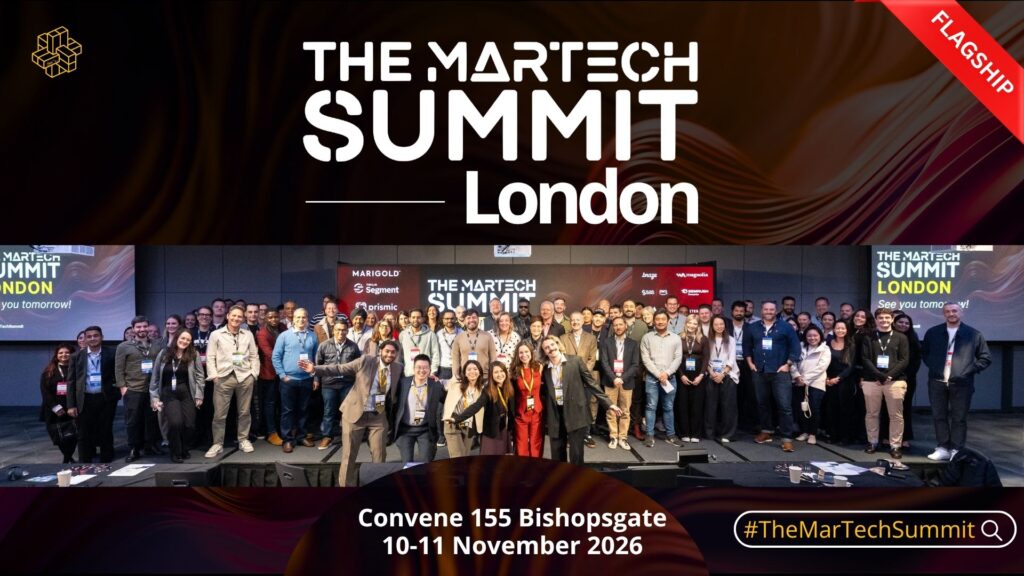
The MarTech Summit London returns this November as Europe’s flagship MarTech event, bringing together over 600 senior marketing, customer experience, digital, data and technology leaders for two days of practical learning, meaningful networking and forward-looking discussions on the future of marketing technology.
Designed for practitioners rather than product pitches, this year’s summit features more than 90 speakers, 30+ leading solution providers, and over 33 sessions across three stages, covering everything from AI-powered marketing and customer intelligence to first-party data, marketing operations, customer experience and revenue growth.
Whether you’re modernising your MarTech stack, scaling AI adoption or improving marketing performance, The MarTech Summit London is designed to provide practical ideas you can take back to your organisation.
Hosted once again at Convene 155 Bishopsgate, this closed-door summit creates an environment where senior decision-makers can openly discuss challenges, exchange ideas, and learn from one another.
➡ Interested in becoming a partner? Don’t hesitate to get in touch with us at sponsor@themartechsummit.com.
Can’t attend in person? No problem. Join BEETc On-Screen, our On-Demand Learning Platform, for exclusive access to 500+ sessions and over 300 hours of content from global summits. Upskill at your own pace, gain actionable insights, and stay ahead in a rapidly evolving business landscape.
Stay up to date with our Speaker Line-up, Session Information, and Agenda Updates by following us on:
See more MarTech Thoughts interview pieces here!
Last updated: August 2026